How to Hire a Personal Brand Videographer as a Founder (and What You Should Get Each Month)

If you're a founder looking for a personal brand videographer, here's the short answer: hire for the cadence and the edit, not the camera. Almost anyone with a good camera can make you look sharp for one afternoon. What actually builds a personal brand is showing up on camera every month, saying something worth hearing, and having someone turn that footage into posts that sound like you. So the person you hire has to plan with you, coach you on set, and own the edit, or you need a separate person who does.
I'm Bryson Valencia, and I run Social Cuts, a marketing agency in Austin that leads with video. A big part of what we do is put founders and executives on camera on a recurring schedule and turn that into content for LinkedIn, Instagram, and YouTube. This guide is what I'd tell a founder before they sign with anyone, including us.
The short answer: what you're really hiring a personal brand videographer for
Most pages that rank for this search are portfolios. They show beautiful footage and a contact form. That tells you whether someone can light a room. It doesn't tell you whether you'll still be posting in month four, which is the only thing that matters for a personal brand.
Before you look at a single reel, decide which of these you're actually buying:
| What you need | Who fits | What to judge them on |
|---|---|---|
| One polished film about you: a bio video, a speaker reel, a fundraising or launch piece | A personal brand videographer or small crew for a project | Story, lighting, sound, and a clear finish date |
| Raw footage of your day that your own editor or team cuts | A shooter booked by the hour or day | Angles, audio, and how fast they hand over files |
| A steady stream of founder content every month | A videographer who plans and edits, or an agency that runs the whole system | Cadence, how they get ideas out of you, and edit quality over months |
The first row is a project. The last row is a system. Most founders who search "personal brand videographer" need the system but shop for the project, then wonder why the beautiful video they paid for didn't move anything.
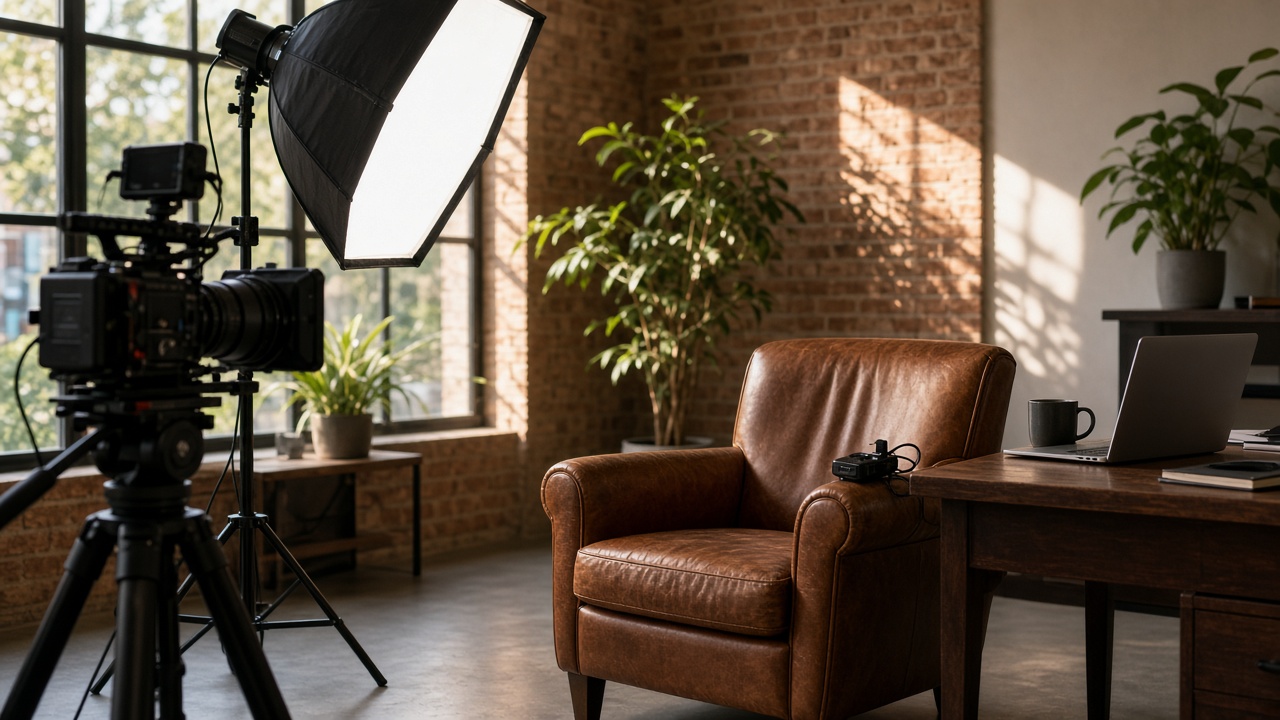
A one time personal brand film vs a monthly founder content cadence
A personal brand film is one strong piece. It's great for a website, a speaking page, a raise, or a launch. You'll use it for a year or more. If that's what you need, judge the videographer on story and craft, agree on the script or interview questions up front, and expect a few weeks from shoot to final.
Founder content is different. It's a monthly rhythm: a planning call, a content day, an edit, posting, and a look at what worked before the next shoot. It wins because it compounds. Your audience sees you think out loud week after week, and the people who buy from you or join your team start to feel like they know you before the first call.
There's a reason this matters beyond vanity. In the 2025 Edelman and LinkedIn B2B Thought Leadership Impact Report, 55% of the hidden decision makers surveyed said they use thought leadership as part of vetting suppliers. That study is about thought leadership in general, not video, but the point carries: the people deciding whether to work with you are watching what you publish, and a founder who shows up consistently is easier to trust than a logo.
What a channel can do when the videos have a job
A lot of personal brand conversations stop at how you look on camera. The part that actually moves a business is what the videos do for the channel, and for the offer behind it, when someone sticks with the work. These are channels we have produced or directed. The numbers come from YouTube Studio, not from a pitch deck.
An expert who already had an audience, but no YouTube business
In April 2024, Gordon Ryan came to us to launch his official YouTube channel. He is the best in the world at jiu-jitsu, with a massive Instagram presence, but no plan for turning YouTube into a business that served his real product: paid instructionals. We have produced every video on that channel since the first upload, 148 videos over two and a half years.
From April 2024 through October 9, 2026, the channel reached 15,090,420 views, 519,919 watch hours, and 136,133 subscribers, all organic. The 89 long form videos average 76,555 views each. Shorts cut from that long form added 8.3 million views across 59 videos, and every description routes people to his courses. The longer videos did something else a 60 second clip cannot: they let people watch him teach, train, and talk for 20 minutes at a time. That is how an audience actually gets to know you, and it is why a channel can change how people see a founder in a way a single polished film cannot.
A new channel we built to sell courses, not to collect views
We run the same idea on a channel where our own money is on the line. Pickleball Hub is an online instruction business, and I am one of three owners. YouTube is how we find customers. We launched the channel in September 2025 only after we already knew who we were talking to, from a quiz on our own site, not from a guess. Then we made fewer videos, at a higher standard than the space was used to, each one aimed at that viewer.
In 14 months, 27 videos did 917,922 views, 59,862 watch hours, and 10,219 subscribers, all organic. The average long form video does 56,357 views on a channel with 10,219 subscribers, more than five times the subscriber count. That only happens when topics are built for search and suggested traffic, not just posted at people who already follow you. Every video points back to the courses. For a founder, the useful part is this: a hard drive of pretty footage with no job will not do that. A smaller set of videos, each aimed at a real person and a real offer, can.
A channel that was already posting, just not on purpose
Sometimes the gap is not that you need more videos. It is that the videos are aimed at the wrong thing. In August 2026 we started working with TACFIN&FIELD, a Texas outdoor brand founded by Justin Mitchell. The YouTube channel already had 3,216 subscribers and 266,094 lifetime views, but 70% of those views came from shorts that held attention for 26 seconds on average. A typical long form video did a few hundred views, and the best one in the channel's history had 8.3 thousand.
We wrote the plan before a single frame was shot. His own analytics and real search data said to lead with beginner dove hunting content people were already looking for, rather than only the cinematic adventure films he wanted to make. In the nine weeks after that brief, with no ad spend, the channel added 69,152 views and 2,092 watch hours. That is 26% of its lifetime views and 32% of all the watch time the channel had ever earned, added in 63 days. The first video from the plan, a beginner's guide to dove hunting, did 24,507 views and 1,160 watch hours and became the most viewed long form piece in the channel's history, roughly three times the previous best. A video he made off plan in the same window did 87 views.
Three weeks after that first video went live, he told us, "It's outperforming my adventure stuff, which is wild." In the same stretch, MagPul approached the brand unprompted about a sponsored film. The point is not the niche. The point is that a personal brand videographer who only shows up with a camera cannot make this call for you. Someone has to look at the data, give every video a job, and then stay with the channel long enough for the work to compound.
What a good month of founder content includes
Whoever you hire, a healthy monthly engagement for a founder should cover these pieces. If a quote only covers the shoot, the rest lands on you.
- A planning call before every shoot. Thirty to sixty minutes where someone pulls topics out of your head: questions customers ask, opinions you hold that your industry doesn't, stories from the business. This is where the content actually comes from.
- A topics bank. A running list of ideas, sorted by what's ready to film. A good partner adds to it between shoots, so you never sit down on camera and ask "so what are we talking about?"
- One content day a month (or a half day every two weeks). Filmed in a few setups: seated talking pieces, a walk and talk, you doing the real work. Batching is what keeps a busy founder's time cost low.
- A long form anchor plus short cuts. One longer conversation or YouTube piece, cut down into vertical clips. Recording one long conversation and cutting it down beats filming a dozen disconnected one liners.
- An edit that sounds like you. Captions, pacing, and hooks matched to each platform, with your words left intact. More on judging edits below.
- A review loop. A short look each month at which pieces got watched to the end and which got comments from the right people, so the next planning call starts from data instead of guesses.
For what a single shoot day should produce in raw output, I've covered that in how to hire a videographer for social media. This article is about you as the subject, which changes what you need from the person behind the camera.
Who writes what you say on camera
This is the question that decides whether your content sounds like a real person or a hostage video. There are three ways to do it, and a good personal brand videographer will tell you which one fits you after one conversation.
Talking points, not scripts
For most founders this is the answer. You get a short list of prompts or questions for each piece, in the order they'll be asked. You answer in your own words. The editor cuts the best version. It sounds natural because it is natural.
A teleprompter for tight messages
A prompter works for a launch announcement, a precise product explanation, or anything legal has to read first. It doesn't work for opinions and stories. Most founders sound stiff reading one, and viewers notice in seconds. If someone wants you on a prompter every shoot, ask why.
Interview style with someone off camera
Someone you trust asks real questions, you answer them, and the questions are cut out. This is the fastest way to get a founder who "freezes on camera" to sound like they do at dinner. It's also how most of our founder sessions run.
Watch the line between preparing you and writing for you. Preparation means you know what's coming and have thought about it. Writing your answers for you means your content stops sounding like you, which defeats the point of a personal brand.
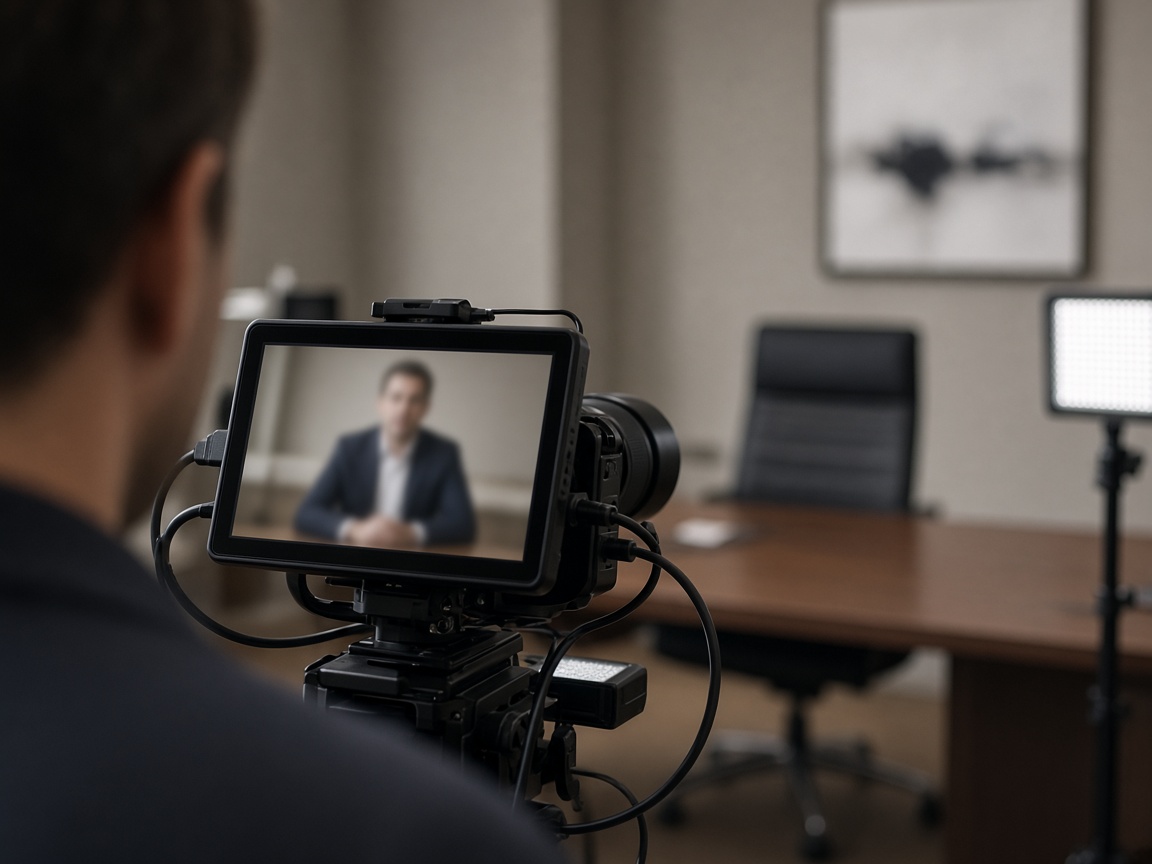
On camera coaching: what a good videographer does on set
You're not an actor, and nobody good expects you to be. What you should expect on set:
- A warm up. The first ten minutes are usually throwaway. Good crews plan for that instead of burning your best idea on take one.
- Direction in plain words. "Say that again but start with the punchline" is coaching. Silence and a thumbs up is not.
- Permission to restart. You should be able to stop mid sentence and go again without it becoming a thing.
- Energy checks. Camera flattens people. Someone should tell you, kindly, when you're reading as tired.
- Clean sound every take. A lav or a boom, checked before you start. Viewers forgive soft video. They leave over bad audio.
Book your content day for a time of day you're sharp, and protect it like a board meeting. A founder who walks in from three back to back calls gives you their worst take.
How to judge a personal brand videographer's reel
A reel is the best thirty seconds of someone's best year. Look past it.
- Watch full pieces, not the montage. Ask for three complete videos where a founder or executive talks to camera. You're judging whether the person on screen looks comfortable for two minutes, not whether the b roll is pretty.
- Listen with headphones. Room echo, hum, and clipped audio are the most common tell of someone who mostly shoots without talking.
- Look for real people, not models. Anyone can make a fitness influencer look good. Can they make a CFO in a conference room look good?
- Check for a run of work. Ask to see three months of one client's posts. Consistency in look, pace, and voice across months is the actual skill you're paying for.
- Check the vertical cuts. Were they framed for a phone on purpose, or cropped out of a wide shot after the fact? YouTube now lets Shorts run up to three minutes, so short form isn't only fifteen second clips anymore, and the person you hire should edit for each length.
- Ask who edited it. A lot of reels are shot by one person and cut by someone else. You want to know who you're actually getting.
Questions to ask a personal brand videographer before you sign
- How do you get topics out of me, and who keeps the list between shoots?
- Who edits, and will it be the same editor every month?
- How long from shoot day to finished posts, and how many rounds of changes are included?
- Do you post for me, or do you hand off files? If you hand off, in what formats and sizes?
- What happens to the raw footage, and who owns the finished videos?
- How do you decide what to film next month? Do you look at what performed?
- What do you need from me before each shoot, and how much of my time does a month take?
- If I want to stop after three months, what do I walk away with?
On ownership: for commissioned work, who owns the copyright comes down to what's written in your agreement. The U.S. Copyright Office explains how that works in its circular on works made for hire. Get footage ownership, music licensing, and portfolio use in writing before the shoot. I cover the details in the social media videographer guide, so I won't repeat them here.
What a personal brand videographer costs (briefly)
I wrote a full breakdown of day rates and crew math in videographer rates and video production pricing, so here's only the part founders get wrong. The camera time is usually the cheap part. As one public example, a Miami personal brand videographer lists $329 for two hours and $629 for six hours of filming, with every raw file included and editing quoted separately. That's a fair model for what it is. But raw files don't post themselves. Someone still has to plan, edit, caption, and publish, every month.
So when you compare quotes, compare what you end up with at the end of the month, not the hourly rate. If the editing is separate, price it. If you plan to hire an editor yourself, my video editor salary and hiring costs article covers what that runs.
When a personal brand videographer isn't enough
A great videographer is the right hire when you already have someone who owns your content plan and posting, like a marketing lead or a sharp chief of staff. You bring the plan, they bring the camera and the edit.
You need more than a videographer when:
- Nobody on your team owns what you post or when.
- You've hired shooters before and ended up with a hard drive of footage nobody cut.
- You want the personal brand to tie into company marketing: hiring, sales, launches, events.
- You don't want to manage a shooter, an editor, and a social person separately.
That's where a marketing agency that leads with video fits. At Social Cuts, the shoot is one part of the job. We plan the topics, run the content day, edit, and ship the posts, and the founder's channel works alongside the company's marketing instead of next to it. If you're comparing vendors and want the shoot to serve a plan rather than be the plan, our video production page shows how we run it, and the 60 second quiz tells you if we're a fit.
Hiring a personal brand videographer in Austin
A few things are specific to filming founders here:
- Use your own space first. Your office, your shop floor, your job site. Location fees add up, and your own space tells your story better than a rented loft.
- Plan around the heat. From late spring through early fall, outdoor walk and talks work best early in the morning or close to sunset. Midday sun is harsh on faces and hard on audio when the cicadas are going.
- Plan around events. South by Southwest, ACL, and big race weekends tie up crews, hotels, and parking. If you're filming during one, book early.
- Local helps for cadence. A monthly founder engagement is easier when your crew can show up on short notice for a moment worth filming. If you also need event coverage, my Austin event videographer guide covers that side.
FAQ
What does a personal brand videographer do?
A personal brand videographer films a founder, executive, or creator for their own channels, usually LinkedIn, Instagram, and YouTube. The best ones also help plan what you'll talk about, coach you on set, and edit the footage into finished posts. Some only film and hand over raw files, so ask which you're getting.
How much does a personal brand videographer cost?
It depends on whether you're buying camera time, a finished film, or a monthly system. Raw filming can be priced by the hour, like the Miami example above, while finished edits and monthly engagements cost more because they include planning and editing. See our video production pricing guide for the full breakdown.
How often should a founder film content?
Monthly is the rhythm most founders can actually keep. One content day a month, or a half day every two weeks, gives an editor enough to post steadily without eating your calendar. Consistency beats volume.
Do I need a script for personal brand videos?
Usually not. Talking points or an interviewer off camera sound more natural for opinions and stories. Save a prompter for announcements or anything with exact wording.
What is a personal brand video?
It's any video where you, not your company logo, are the subject: a bio film, a speaker reel, a talking piece on LinkedIn, a YouTube conversation, or a short clip of you explaining how you think. The goal is to let people know and trust you before they ever talk to you.
Should I hire a videographer or an agency for founder content?
Hire a videographer if someone on your team already owns the content plan and posting. Hire an agency if nobody does, or if you want your personal brand tied into company marketing without managing several freelancers.
Who owns the footage from a personal brand shoot?
Whatever your contract says. Settle ownership of raw footage and finished videos, music licensing, and portfolio use in writing before the shoot. The U.S. Copyright Office circular on works made for hire is a good starting point for that conversation with your lawyer.